Seedance 2.5: A new era of AI-powered filmmaking?
Seedance 2.5 extends continuous generation to 30 seconds, accepts up to 50 multimodal references and adds region-level editing, so creators can direct a complete scene instead of assembling short clips.
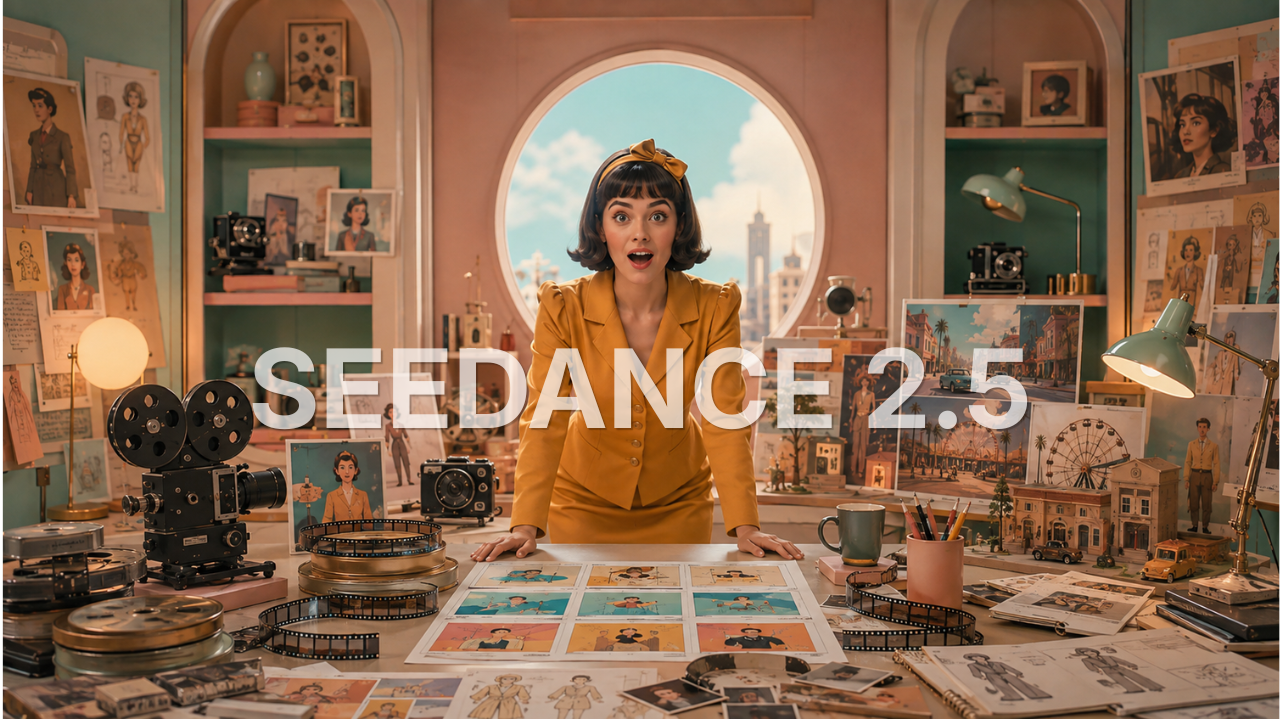
AI video generation has advanced quickly, but much of the process still centres on producing short clips, regenerating shots that do not match and repairing the results in post-production. Seedance 2.5 could change that workflow by generating far more of a scene in a single pass.
The model extends continuous video generation to 30 seconds, supports up to 50 multimodal references and introduces more precise editing of selected video regions. Together these upgrades bring creators closer to a process where they plan, generate and refine complete scenes rather than repeatedly producing disconnected clips.
What changed from Seedance 2.0?
Seedance 2.0 already established a strong multimodal foundation, generating multi-shot videos of up to 15 seconds from text instructions alongside as many as nine images, three videos and three audio clips, and it supported video extension and editing. Seedance 2.5 builds on those capabilities in ways filmmakers will feel directly in their workflow. Set side by side, the two versions compare like this.
| Capability | Seedance 2.0 | Seedance 2.5 |
|---|---|---|
| Continuous video length | Up to 15 seconds | Up to 30 seconds |
| Multimodal references | Up to 9 images, 3 videos and 3 audio clips | Up to 50 reference assets |
| Video editing | Video extension and editing | More precise, region-level editing |
| Reference-based control | Images, video and audio guide composition, movement and sound | Expanded reference to video control |
| Creative scope | Short shots and brief multi-shot clips | Longer, more developed sequences |
These changes matter because they compound. A filmmaker can hold a fuller scene inside one generation, give the model far more context about characters, locations, products, movement and sound before it renders anything, then correct a specific detail without recreating the whole sequence.
From generating clips to building scenes
The difference between 15 and 30 seconds is not simply more footage, because a longer continuous generation can carry the basic structure of a scene. Inside a single generation, a brand team can introduce a product, demonstrate how it is used and end on a final reveal. A director can establish a location, follow an action through it and reach a turning point, and a social creator can develop one idea without stitching together several separately generated clips.
Every additional generation also creates another opportunity for continuity to break. A character's appearance may shift, a product may lose an important detail, or the lighting and camera direction may no longer match the preceding shot. Generating more of the sequence at once reduces these joins and helps hold character identity, movement, lighting and spatial relationships together across a longer stretch of video. Filmmakers can then treat what comes back as a complete scene draft rather than a set of fragments that has to be made visually compatible first.
Start each scene with more project context
Filmmaking rarely begins with a written description alone. Scripts, storyboards, character designs, location photographs, product references, movement studies, music and camera plans all shape how a scene should look and feel. Seedance 2.5 accepts up to 50 multimodal references in a single generation, so a filmmaker can combine character references, storyboard frames, location images, temporary audio and examples of camera movement in one pass, and a commercial team can supply multiple product angles, campaign visuals, existing footage and sound direction at the same time.
Creators give the model more context about the wider project before it generates anything. Instead of producing individual clips from limited instructions and trying to make them match afterwards, filmmakers bring more of the visual, narrative and technical direction into the generation from the beginning. This does not guarantee consistency across an entire film, but it does create a stronger foundation for scenes that belong to the same visual world.
More precise editing means fewer complete regenerations
One of the most frustrating parts of AI video creation is the near-perfect result. The performance, camera movement and lighting all work, but a product detail is wrong, a character's clothing changes briefly, or an unwanted object appears in the background, and regenerating the entire sequence may fix that one problem while changing everything that already worked.
Region-level editing in Seedance 2.5 lets creators adjust selected parts of a video while preserving the broader scene, so a single incorrect detail no longer forces a full regeneration. Creators keep the composition, movement and timing they have already approved, which saves production time and the generation credits a repeated scene would otherwise consume. For product films, advertising and branded content that control is particularly valuable, because packaging, clothing, props and product details often need to stay accurate even when the rest of the generated scene already works.
Is it a new era of AI-powered filmmaking?
Possibly, though not because the model replaces the filmmaker. Seedance 2.5 still depends on human decisions about story, performance, pacing, composition, sound and meaning. Longer generations can still produce weak scenes, more references can pull a scene in conflicting directions, and precise editing does not remove the need for review and post-production.
What changes is the level at which creators work. Earlier AI video tools were most effective at producing an image in motion or a brief visual clip, while Seedance 2.5 moves closer to producing a directed, context-rich and revisable scene. Filmmakers can generate longer sequences, bring more of their production materials into each generation and correct specific problems without starting again. Storyboarding, referencing, generating and refining begin to function as parts of one connected creative process rather than separate stages, and that is a meaningful step from experimentation towards production.
Seedance 2.5 is coming soon to Moonlite Labs, where creators will be able to explore its longer generations, expanded reference capacity and more precise editing alongside Seedance 2.0 with native 4K output and the rest of the models in the workspace. Whether it begins a new era will depend on what filmmakers make with it, but it offers a more capable starting point than a generated clip: the foundation of a scene.